

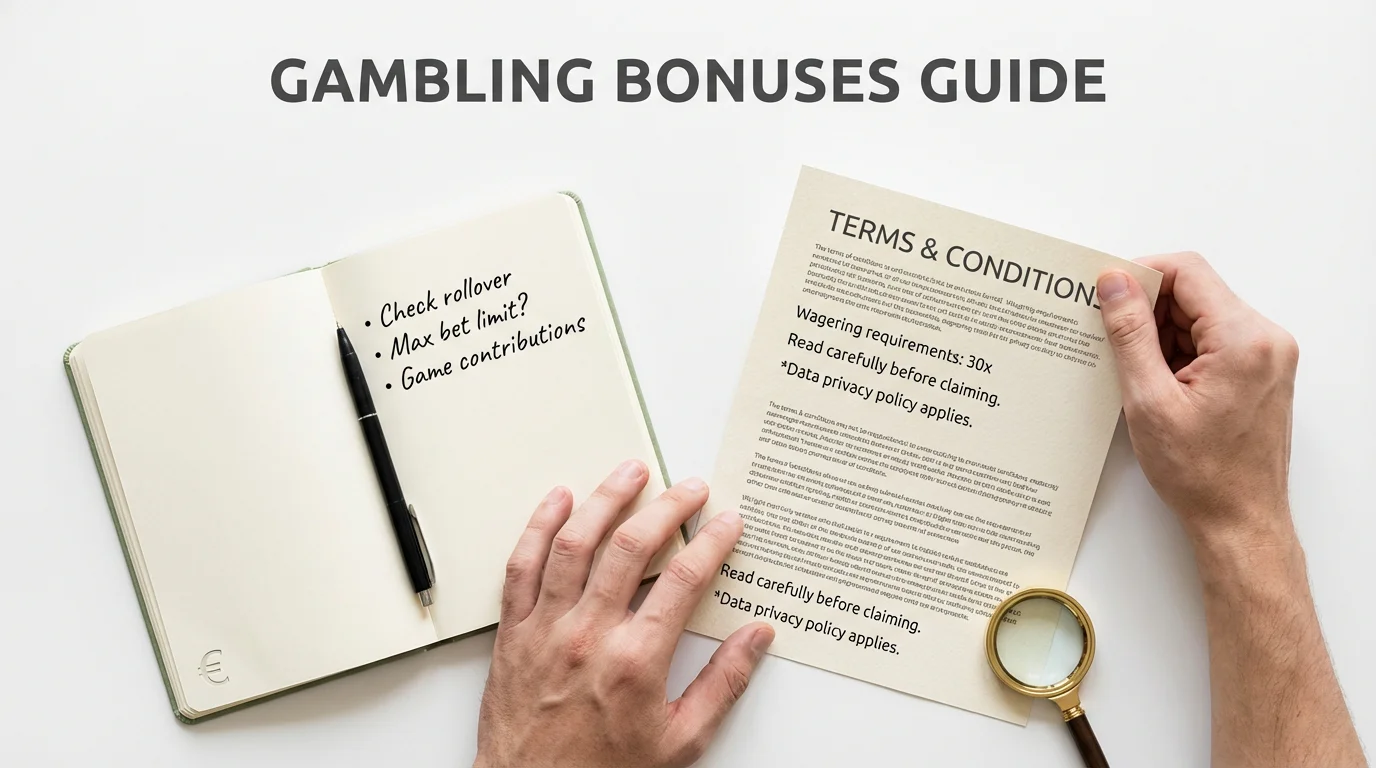
Bonuses Are a Business Decision — Not a Gift
Every bonus has a business model behind it. That sentence should be framed and mounted above every casino registration page, every free bet banner, and every “exclusive offer” email that lands in your inbox. Gambling operators do not distribute bonuses out of generosity. They distribute them because the expected cost of each bonus — after wagering requirements, game restrictions, expiry windows, and the natural house edge erode its value — is lower than the expected revenue that bonus generates from the players who claim it.
This is not a moral judgement. It is a mathematical one. The casino or bookmaker has modelled the behaviour of bonus claimants and determined that offering you a £50 matched deposit at 10x wagering will, on average, return more to the operator than it costs. Some players will clear the wagering, withdraw a profit, and never return. Many more will exhaust the bonus, deposit again with their own money, and become long-term customers. The bonus is customer acquisition cost, not charity.
Understanding this changes how you approach every promotional offer you encounter. Instead of asking “how much free money am I getting?” — which is the question the marketing is designed to trigger — you start asking better questions. What are the actual conditions attached? How much real money do I need to wager before anything becomes withdrawable? Which games contribute to clearing the requirement, and at what rate? What is the expiry window, and is it realistic for how I actually play? What happens if I do not complete the wagering in time?
This guide answers those questions in detail. It covers every major bonus type available at UK gambling sites in 2026, explains the mechanics of wagering requirements without euphemism, walks through the regulatory changes the Gambling Commission introduced earlier this year, and provides a practical framework for deciding which bonuses are genuinely worth your time — and which ones are better declined. The goal is not to discourage you from claiming bonuses. It is to ensure that when you do, the decision is informed rather than impulsive.
Types of Gambling Bonuses at UK Sites
The UK gambling market uses a relatively small set of bonus structures, but the variations within each type create enough complexity to confuse anyone who has not spent time pulling apart the terms. Before examining the mechanics of wagering requirements or the 2026 regulatory changes, it helps to understand what you are actually being offered. Each bonus type carries a different risk profile, a different expected value, and a different set of conditions that determine whether the bonus works in your favour or against it.
The three most common categories are matched deposit bonuses, free bets, and free spins. Cashback offers form a fourth category that overlaps with the others but operates on a distinct mechanism. What follows is a breakdown of each, stripped of the promotional language that normally surrounds them.
Matched Deposit Bonuses
A matched deposit bonus adds a percentage of your initial deposit as bonus funds. The most common structure is a 100% match: deposit £50, receive £50 in bonus money. Some casinos offer higher percentages on smaller deposits — 200% on £25, for example — which produces the same £50 bonus but requires a lower upfront commitment. The match percentage is the headline. The conditions attached to those bonus funds are the substance.
Bonus funds from a matched deposit are not cash. They sit in a separate balance and cannot be withdrawn until you complete the wagering requirement — a specified number of times you must wager the bonus amount before it converts to real money. Under the 2026 UKGC framework, that requirement is capped at 10x. A £50 bonus at 10x wagering means you must place £500 in total bets using bonus funds before any resulting balance becomes withdrawable. The wagering must typically be completed within a defined window — seven to thirty days is standard — and only bets on qualifying games count toward the target.
The critical variable most players overlook is game contribution. Slots usually contribute 100% to wagering, meaning every pound wagered on slots counts fully. Table games like blackjack and roulette often contribute only 10% to 20%, and some games are excluded entirely. If you prefer table games but the bonus only counts slot play toward wagering, the bonus is functionally useless to you regardless of how attractive the headline looks.
Free Bets and No Deposit Offers
Free bets are the dominant bonus format at sports betting sites. The standard structure is a “bet and get” promotion: place a qualifying bet with your own money, and the bookmaker credits free bet tokens to your account. Those tokens can be used to place additional bets, but the mechanics of how they pay out vary significantly.
The most important distinction is between stake-returned and stake-not-returned free bets. With a stake-returned free bet, you receive both the profit and the original stake value if the bet wins. With stake-not-returned — which is the far more common format in the UK market — you receive only the profit. A £10 free bet at odds of 3.0 returns £20 in the stake-not-returned model (£30 total payout minus the £10 stake that is not returned) versus £30 in the stake-returned model. The expected value of a stake-not-returned free bet is roughly 60% to 75% of its face value, depending on the odds at which you use it.
No deposit bonuses are rarer and smaller in scale. They credit a small amount — typically £5 to £10 in free bets or bonus funds — to your account upon registration without requiring a deposit. The catch is always in the terms: withdrawal caps on winnings from no-deposit bonuses are standard, and wagering requirements apply. A £5 no deposit bonus with a £50 maximum withdrawal and 10x wagering is worth far less than the promotional banner implies. These offers are best used as a risk-free opportunity to test a platform before committing your own money.
Free Spins and Cashback Offers
Free spins are the casino equivalent of free bets: complimentary plays on slot games, usually credited as part of a welcome package or an ongoing promotion. Each spin carries a fixed value — typically 10p to 25p — and any winnings are credited as bonus funds subject to wagering requirements. A package of 50 free spins at 10p each has a face value of £5, and the expected return depends on the RTP of the assigned slot and the wagering conditions on the winnings.
The restrictions on free spins deserve attention. Most are locked to a specific game or a small selection of games chosen by the casino, not the player. Maximum win caps are common — your total winnings from the free spins may be capped at £50 or £100 regardless of what the reels produce. Some casinos impose a separate, higher wagering requirement on free spin winnings compared to matched deposit bonuses. Before evaluating a free spins offer, you need three numbers: the spin value, the maximum win cap, and the wagering requirement on winnings. Without all three, you cannot assess the offer’s actual worth.
Cashback operates on a fundamentally different principle. Instead of providing bonus funds upfront, cashback returns a percentage of your net losses over a defined period — typically 5% to 15% paid weekly or monthly. There are two models. Net-loss cashback calculates the return based on your overall losses across qualifying games during the period. All-loss cashback — far less common — returns a percentage on every losing bet regardless of your net position. Cashback is generally the most player-friendly bonus format because it requires no wagering on the returned amount at many operators, and it provides a genuine cushion against variance rather than adding conditions to your play.
Best casino sites in the UK
- BeOnBetBonus: 100% up to €500 + 100 FS · Payout speed: 1-3 business days
- EvoSpinBonus: 125% up to €2500 + 125 Free Spins · Payout speed: 1-3 business days
- SlotoSportBonus: 500% up to £ 10 200+ 777 FS · Payout speed: 1-3 business days
- x3betBonus: Welcome Pack 100% Up to £1.000 + 200 Free Spins · Payout speed: 1-3 business days
- Revery PlayBonus: 100% up to€1,000+ 100 FS · Payout speed: 1-3 business days
- ZombillionBonus: Welcome Pack 250% up to £4000 + 200 FS · Payout speed: 1-3 business days
- DieselwinBonus: Welcome Pack 250% up to £4000 + 200 FS · Payout speed: 1-3 business days
- WinBeastBonus: €5000 + 500 FS + €650 Freebet · Payout speed: 1-3 business days
- BritsinoBonus: Welcome Package – Get your £2,200 + 2,000 FS · Payout speed: 1-3 business days
Wagering Requirements — The Number That Matters Most
A 50x wagering requirement turns a £50 bonus into a £2,500 commitment. That sentence is not hyperbole — it is arithmetic. Before the 2026 UKGC reforms, wagering requirements at UK casinos ranged from 20x to 65x, with the industry average hovering around 35x. At 35x wagering on a £50 bonus, you would need to place £1,750 in total bets before the bonus or any resulting winnings became withdrawable. The house edge on every one of those bets means the casino was statistically likely to recover the bonus — and then some — long before you completed the requirement.
The mechanics are straightforward. When you claim a bonus with a wagering requirement, every qualifying bet you place counts toward a running total. If the requirement is 10x on a £50 bonus, you need to accumulate £500 in wagers. A £2 slot spin counts £2 toward the total. A £5 blackjack hand might count only 50p if table games contribute at 10%. The counter does not care whether individual bets win or lose — it tracks total wagered amount, not results. You could lose every bet and still complete the wagering requirement; you would simply have no funds left to withdraw.
Game contribution rates are where the real complexity lives. Slots almost universally contribute 100%. Roulette and blackjack typically contribute 10% to 20%. Some games — jackpot slots, live dealer tables, certain low-house-edge variants — contribute 0%. The casino specifies these rates in the bonus terms, and they fundamentally alter the effective wagering requirement. A 10x requirement where only slots count at 100% is genuinely 10x for slot players. For a blackjack player at a 10% contribution rate, the effective requirement is 100x — ten times harder to clear.
The mathematical reality of wagering is governed by the house edge. On a slot with 96% RTP, the expected loss per £100 wagered is £4. To wager £500 in total (10x on a £50 bonus), your expected loss from house edge alone is £20. You started with £50 in bonus funds, so your expected remaining balance after completing the wagering is approximately £30. That is the realistic expected value of a £50 bonus at 10x wagering on a 96% RTP slot — not £50, but roughly £30. At higher wagering requirements or lower RTP games, the expected value drops proportionally. At 35x wagering, the old industry average, the expected value of that same £50 bonus on the same slot falls to approximately zero.
This is why the 2026 UKGC wagering cap changed the economics of bonuses fundamentally. At 10x, bonuses have genuine positive expected value. At the old industry averages, they were largely illusory. But the wagering cap was only one of the regulatory interventions that reshaped the bonus landscape this year.
2026 UKGC Changes to Bonus Rules
The Gambling Commission rewrote the bonus playbook in January. The changes that took effect on 19 January 2026 represent the most significant intervention in UK gambling promotions since the credit card ban of April 2020. Two headline measures reshaped the bonus landscape: a hard cap on wagering requirements and a ban on cross-product bonus conditions. Separately, the Commission introduced mandatory deposit limit prompts from 31 October 2025, requiring operators to invite new customers to set a financial limit before their first deposit.
The wagering cap limits all bonus playthrough requirements to a maximum of 10x the bonus amount. Any operator offering a bonus with a wagering requirement above 10x is in breach of its licence conditions. The impact was immediate and measurable. Casinos that had previously marketed welcome bonuses at 35x or 40x wagering were forced to either lower the requirement or reduce the headline bonus amount to maintain their margin. Most chose a combination: smaller bonuses with significantly lower wagering, resulting in offers that are less visually impressive but far more likely to deliver actual value to the player.
The cross-product bonus ban addresses a practice that had become widespread: requiring players to wager casino bonuses on sports bets, or vice versa, as part of the playthrough conditions. This often forced players into unfamiliar territory, wagering on games or markets they did not understand, purely to satisfy a promotional requirement. Under the new rules, a casino bonus must be cleared through casino play, and a sports free bet must be used on sports markets. The requirement aligns the bonus with the product the player actually chose to use.
The mandatory deposit limit prompt — introduced from 31 October 2025, ahead of the January bonus reforms — is the least discussed but potentially most impactful change. Before a player can make their first deposit, the operator must present a financial limit selection screen. The player can set a daily, weekly, or monthly cap, or explicitly decline to set one. The Gambling Commission’s intent is to interrupt the rush from registration to first deposit — a flow that was previously engineered to be as frictionless as possible — and insert a moment of financial reflection before money enters the picture. Early data suggests that players who set limits at the point of registration tend to maintain those limits, making this a quiet but effective responsible gambling intervention.
How to Read Bonus Terms Like a Professional
The fine print is the actual offer. Everything else — the banner, the landing page, the promotional email — is advertising. Until you have read the terms and conditions attached to a bonus, you do not know what you are agreeing to. This is not a theoretical concern. The most common complaints to Alternative Dispute Resolution providers about UK gambling sites involve bonus terms: players who believed they had met the conditions but discovered an exclusion, a cap, or a restriction they had not noticed.
Reading bonus terms does not require legal expertise. It requires knowing which clauses matter and where operators typically insert conditions that reduce the value of the offer. The terms document for a typical UK casino welcome bonus runs to several hundred words and covers wagering requirements, game contributions, maximum bet limits during wagering, expiry periods, maximum withdrawal caps on bonus winnings, payment method exclusions, and eligibility restrictions. Most of these clauses are standard. A few are where operators differentiate — and where the gap between a fair bonus and a poor one becomes apparent.
Start with the wagering requirement and game contributions, since those determine whether the bonus is mathematically clearable for the way you play. Then check the expiry window — a generous wagering requirement becomes punishing if the deadline is tight. After that, look for maximum bet limits during wagering (exceeding the limit typically voids the bonus and all associated winnings), maximum win caps, and any payment method restrictions that might affect your deposit or withdrawal eligibility.
Common Traps in Bonus Terms and Conditions
Maximum bet limits during wagering are the most dangerous trap because breaching them typically results in the forfeiture of the entire bonus and all accumulated winnings — with no warning and no recourse. The standard maximum bet while wagering bonus funds is £5 per spin or per hand. Place a £6 bet, even accidentally, and the casino can void everything. This clause exists in virtually every bonus T&C, yet it catches players regularly because nothing in the interface prevents you from placing a bet above the limit. The responsibility falls entirely on the player.
Payment method exclusions are another consistent source of frustration. Some bonuses exclude deposits made via certain e-wallets — Skrill and Neteller are frequently excluded from welcome offers even though both are accepted as payment methods on the site. The deposit processes normally, but the bonus does not trigger. The player discovers the exclusion only when the expected bonus fails to appear. Checking payment method eligibility before depositing takes thirty seconds and avoids this entirely.
Expiry windows create artificial pressure. A 10x wagering requirement on a £50 bonus requires £500 in total wagers. If the expiry is seven days, you need to average over £70 per day in wagering to clear the requirement. For a casual player wagering £5 per spin in occasional sessions, that timeline is unrealistic. Operators set tight expiry windows deliberately — they increase the proportion of bonuses that expire uncompleted, reducing the operator’s cost. If the expiry window does not fit your natural playing pattern, the bonus is working against you.
Maximum win caps limit the amount you can withdraw from bonus-funded play regardless of your actual balance. A £200 maximum win cap on a £50 bonus means that even if you run the balance up to £500, you can only withdraw £200. The remaining £300 is forfeited. Win caps were less common before the 2026 reforms but have become more prevalent as operators adjust their bonus economics to accommodate the lower wagering requirements.
Your Pre-Deposit Bonus Checklist
Before accepting any bonus at a UK gambling site, verify each of the following. This is not exhaustive legal advice — it is a practical filter that takes two minutes and eliminates the most common sources of bonus-related complaints.
First: what is the wagering requirement, and does it comply with the 10x cap? Any figure above 10x is either an error or a red flag. Second: which games contribute to wagering, and at what percentage? If your preferred games contribute at 10% or less, calculate the effective requirement — it may be ten times the headline number. Third: what is the expiry window? Divide the total wagering target by the number of days and compare that daily figure to your normal play volume. If you would need to play more than you comfortably would, the bonus does not suit your pattern.
Fourth: what is the maximum bet per round while wagering bonus funds? Memorise this number, because the platform will not stop you from exceeding it. Fifth: is there a maximum win cap on bonus-funded play? If so, decide whether the cap is high enough to make the wagering effort worthwhile. Sixth: does your preferred payment method qualify for the bonus? Check the T&C for any excluded deposit methods before transferring funds. Seventh: are there any restricted games — titles that contribute 0% or are entirely excluded from bonus play? If your favourite slot is on that list, the bonus loses much of its appeal.
Running through these seven points before each bonus claim sounds tedious. It is significantly less tedious than completing a wagering requirement over ten days only to discover your winnings are voided because you placed a single bet above the maximum limit.
Getting Real Value from Gambling Bonuses
The best bonus is the one you can actually clear. That principle should override every other consideration, including the headline amount. A £100 bonus that you cannot realistically complete within the expiry window is worth less than a £30 bonus you can clear in two comfortable sessions. The value of a bonus is determined by the intersection of its terms and your personal playing behaviour — not by the number on the banner.
Game selection during wagering is the most controllable variable. If you are wagering bonus funds on slots and every pound counts fully, choosing a game with a higher RTP directly improves your expected outcome. The difference between a 94% RTP slot and a 97% RTP slot is three percentage points per hundred pounds wagered — small on any individual session, but meaningful when you are working through £500 in total wagers. Stick to games where the RTP is published, ideally above 96%, and avoid high-volatility titles during wagering unless you are comfortable with the risk of burning through the bonus balance before completing the requirement.
Timing your deposit to coincide with promotional periods can improve the overall package. Many casinos run enhanced welcome offers during major events, holiday weekends, or new game launches. The bonus amount may increase, additional free spins may be bundled, or the wagering terms may be temporarily relaxed. There is no guarantee that waiting will produce a better offer, but if you are not in a hurry to register, checking whether the casino cycles its promotions is a low-effort way to capture marginally better terms.
The most disciplined approach to bonuses is also the simplest: only claim offers where the expected value, after you account for wagering requirements, game contributions, and the house edge, is positive enough to justify the time and play volume required. If the maths does not work, play without the bonus. Your deposited funds have no wagering requirement, no expiry window, and no maximum bet restriction. Sometimes the most valuable bonus decision is choosing not to take one.
Free Money Doesn’t Exist — But Informed Choices Do
Bonuses reward the informed and penalise the impulsive. That dynamic has always been true, but the 2026 regulatory changes tipped the balance slightly toward the player for the first time in the UK market’s history. The 10x wagering cap means bonuses now carry genuine expected value rather than serving as elaborate retention mechanisms dressed up as generosity. The cross-product ban means you clear your bonus on the games you chose to play, not the ones the operator steers you toward. The deposit limit prompt — rolled out from October 2025 — means you start with a financial boundary in place before promotional funds cloud the picture.
None of that makes bonuses risk-free. The house edge still operates on every wager. Expiry windows still pressure your timeline. Maximum bet limits still threaten to void your progress with a single oversight. The improvement is in the scale of the disadvantage, not its elimination. A fairer game is still a game, and the operator still holds a structural edge.
The practical conclusion is to treat bonuses as a minor advantage in a broader strategy, not as the strategy itself. Choose your gambling site based on the quality of the product — game selection, odds, payout speed, mobile performance, responsible gambling tools — and treat bonuses as a supplementary benefit on top of that choice. When the terms are fair and compatible with how you play, claim the bonus. When they are not, decline it and play with your own money on your own terms. The informed decision is always more valuable than the promotional one.
Visit bestgamblingsitesuk for expert-tested UK gambling site reviews and guides.
Browse all UK gambling guides in our Gambling Articles & Guides section.