Best Non GamStop Casino UK 2026
Loading...
Verification Isn’t Optional — Here’s Why It Exists
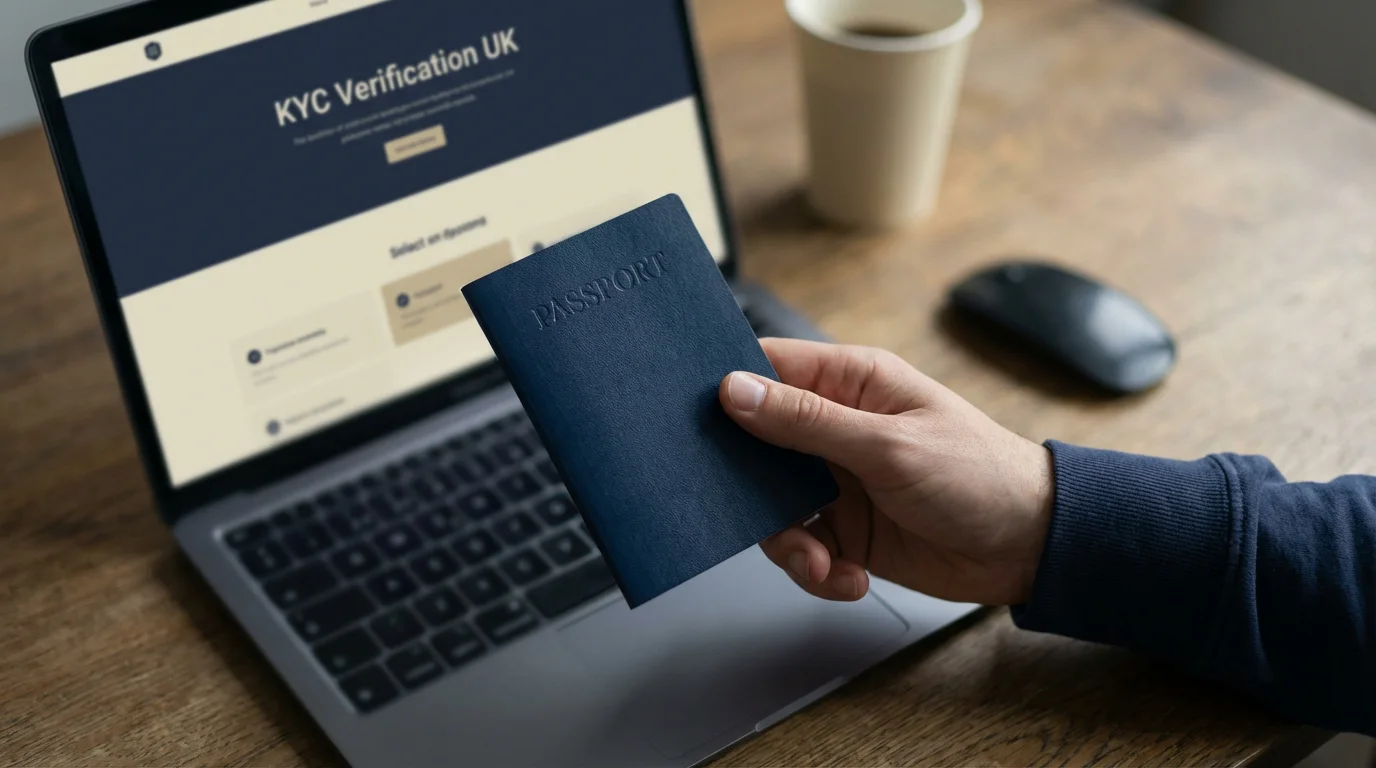
Every UKGC-licensed gambling site will ask you to prove who you are before you can withdraw money. For many players, this comes as an unwelcome surprise — you signed up, deposited, played, and won, and now the site wants a photo of your passport and a utility bill before releasing your funds. The frustration is understandable but misdirected. KYC verification isn’t a hurdle the operator invented to delay your payout. It’s a legal requirement under UK anti-money-laundering regulations, and it applies to every licensed gambling site without exception.
The purpose of KYC is threefold: confirming that you are who you claim to be, verifying that you’re old enough to gamble legally, and ensuring that the money flowing through your account isn’t the proceeds of criminal activity. These aren’t abstract regulatory concerns. Gambling platforms process billions of pounds annually, and without identity checks, they would be efficient channels for money laundering. The verification process exists to prevent that — and by extension, to protect the licensing framework that gives UK players the regulatory protections they rely on.
This guide explains what KYC involves, which documents you’ll need, how affordability checks work alongside identity verification, and how long the process typically takes.
What KYC Is and How It Works
KYC stands for Know Your Customer. It’s a regulatory framework used across financial services — banking, insurance, investment — and applied to gambling under the Money Laundering Regulations 2017 and the UKGC’s Licence Conditions and Codes of Practice. The gambling operator is legally required to verify the identity of every customer and to monitor account activity for signs of money laundering or terrorist financing.
In practice, KYC at a UK gambling site involves two stages. The first is identity verification: confirming your name, date of birth, and address against official documents. The second is ongoing monitoring: the operator’s systems track your deposit patterns, wagering behaviour, and withdrawal requests for activity that deviates from expected norms. Unusual patterns — such as large deposits followed by minimal play and immediate withdrawal requests — can trigger enhanced due diligence, which may involve additional documentation or direct contact from the operator’s compliance team.
Most operators perform a soft electronic check at registration, using services like Onfido, Jumio, or GBG to cross-reference the details you provide against public databases (electoral roll, credit reference agencies). If the electronic check produces a match, you may be able to deposit and play without submitting physical documents. However, withdrawals almost always require full document verification, and some operators now require it before the first deposit as well — particularly since the UKGC tightened its guidance on age verification in 2023.
The operator stores your verification data under GDPR protections. Documents are typically held for five years after your account is closed, as required by anti-money-laundering record-keeping obligations. You have the right to know what data is held and to request its deletion after the retention period expires.
Documents You’ll Need
The standard KYC document set at UK gambling sites consists of three categories: proof of identity, proof of address, and occasionally proof of payment method.
Proof of identity requires a government-issued photo ID. Accepted documents include a valid passport (UK or international), a UK driving licence (full or provisional), or a national identity card (for EU/EEA citizens). The document must be current — expired IDs are not accepted. The operator needs to see the full document, including the photo, personal details, and document number. Photographing your ID on a plain background with good lighting avoids the most common rejection reason: poor image quality.
Proof of address confirms your residential address matches the one registered on your account. Accepted documents typically include a utility bill (gas, electric, water, landline — not mobile phone), a bank or building society statement, a council tax bill, or official government correspondence. The document must be dated within the last three months. Digital statements and PDF downloads are usually accepted, provided the operator’s name, your name, your address, and the date are all clearly visible.
Proof of payment method may be requested if you’re withdrawing to a method that doesn’t match the deposit source. For debit card withdrawals, this might involve a photo of the front of your card showing the last four digits (you can cover the middle numbers). For e-wallets, a screenshot of your account showing your name and the registered email address usually suffices. This step is less commonly required than it once was, but some operators still include it in their verification checklist.
Documents are submitted through the gambling site’s verification portal — typically found in the account settings under “Verification” or “My Account.” Upload the files as JPEG or PNG images. Avoid sending documents via email to generic support addresses, as this is both insecure and often slower to process.
Affordability Checks — The Layer Beyond Identity
Affordability checks are a newer addition to the UK gambling compliance landscape, and they’ve generated significant controversy among both players and operators. Unlike KYC identity verification, which confirms who you are, affordability checks assess whether you can afford to gamble at the levels you’re spending.
The UKGC introduced enhanced affordability requirements following the 2023 White Paper on gambling reform. The framework operates on a tiered trigger system. Basic financial risk assessments are automated and draw on publicly available data — credit reference agency records, open banking data (if consented to), and known financial indicators. More intensive checks are triggered when a player’s net deposits exceed certain thresholds within defined timeframes.
The precise thresholds have been subject to consultation and revision, but the general structure involves a light-touch check at relatively modest spending levels and an enhanced check — which may involve requesting bank statements or payslips — at higher levels. The intention is to identify customers who are gambling with money they can’t afford to lose before significant harm occurs.
Players react to affordability checks with a range of emotions, from acceptance to fury. The core objection is privacy: having a gambling company request your bank statements feels intrusive, particularly when the player believes their spending is within their means. The counter-argument is that operators have a regulatory duty of care and no way to assess affordability without financial data. Neither position is entirely wrong, and the tension between player autonomy and operator responsibility remains unresolved at the policy level.
From a practical standpoint, affordability checks are most likely to affect players who deposit significant sums relative to typical UK income levels. Recreational bettors depositing £20 to £50 per month are unlikely to encounter anything beyond the automated background check. Players depositing hundreds or thousands per month may be asked for supporting documentation. Refusing to provide documentation doesn’t result in a ban, but it may lead to deposit restrictions until the check is completed.
How Long Verification Takes
Verification timelines vary significantly between operators and between verification types.
Electronic verification at registration is typically instant or near-instant. If the details you provide match the databases the operator checks against, your account is verified electronically within seconds. This covers age and identity for the purposes of allowing play, though document verification may still be required before withdrawal.
Document verification depends on the operator’s review capacity. At the fastest sites — bet365, LeoVegas, PlayOJO — documents submitted during business hours are reviewed within two to four hours. At mid-tier operators, the standard timeframe is 24 to 48 hours. At smaller or less well-resourced sites, document review can take up to 72 hours or longer during peak periods.
Affordability checks add a further layer. Automated financial assessments run in the background and don’t create visible delays. Enhanced checks that require document submission follow the same timeline as KYC document review — typically 24 to 72 hours once the documents are received. During this period, deposit restrictions may be applied to the account.
The most effective way to minimise verification delays is to complete the process immediately after registration, before you need to withdraw. Submit your ID and proof of address on day one. Don’t wait until you’ve won £200 and want to cash out — by then, the verification queue stands between you and your money, and the 48-hour wait feels very different when there’s a balance at stake.
Some operators offer expedited or instant verification through advanced identity platforms that process documents in real time using AI-powered image recognition and database cross-referencing. Sites that use these systems — increasingly common among larger operators — can complete full document verification within minutes of upload. If speed matters to you, this is worth checking before registration.
Prove It Once, Play Without Friction
KYC verification is a one-time process at each gambling site. Once your identity is confirmed and your documents are approved, subsequent deposits and withdrawals proceed without repeating the check — unless your personal details change, your account triggers an enhanced due diligence review, or you haven’t used the account for an extended period and the operator requires re-verification.
The verification step is the least exciting part of online gambling. It involves bureaucracy, document scanning, and occasionally waiting. It also provides the regulatory foundation that separates UKGC-licensed sites from unregulated alternatives — and the protections that come with that distinction are worth more than the ten minutes it takes to photograph your driving licence.