

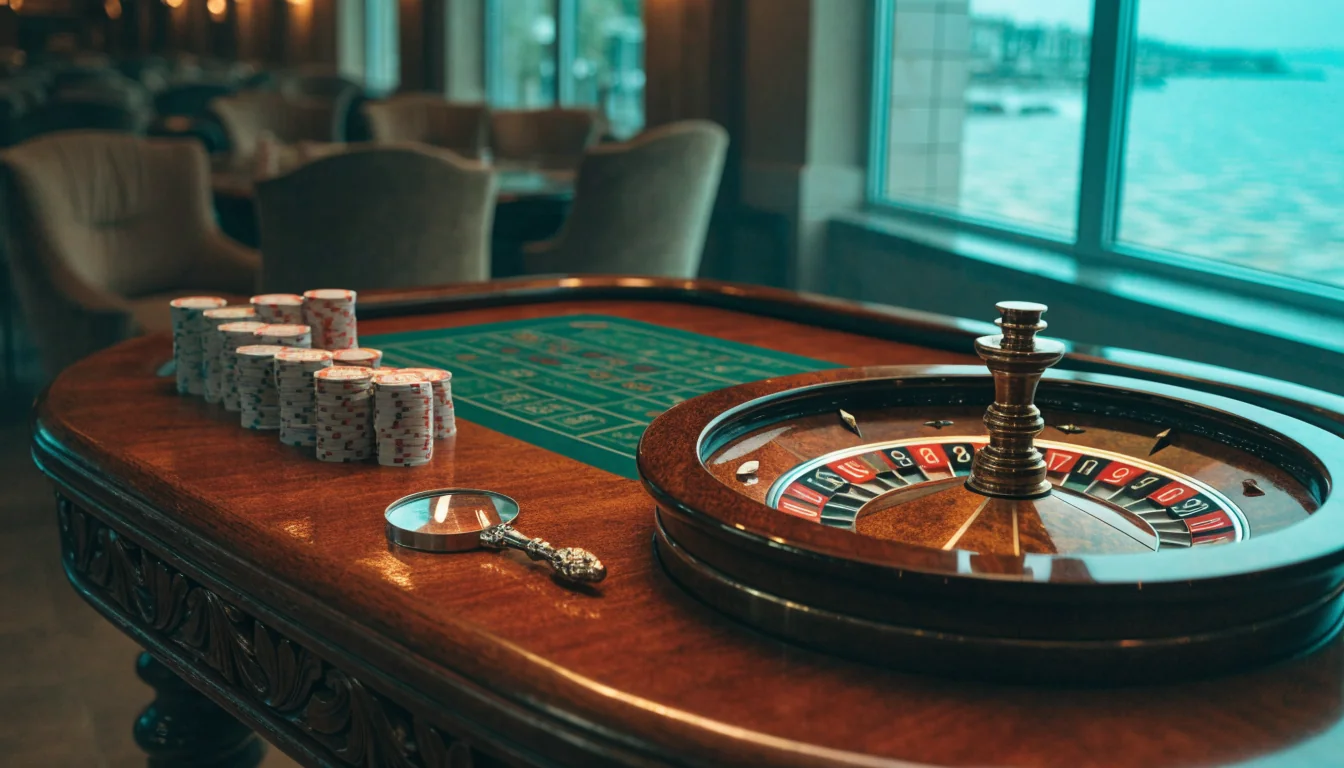
- What a Curacao Casino’s “Best” Label Can—and Cannot—Tell You
- What “Non-GamStop” Means for Online Casino Access
- Curacao Licensing Is Not the Same as UK Gambling Commission Licensing
- What You Can—and Cannot—Verify About a Curacao Casino Licence
- Safety Questions to Ask Before You Gamble Outside GamStop
- Why a Casino Outside GamStop May Still Conflict With Your Exclusion
- If You Have Self-Excluded, Do Not Treat a Non-GamStop Site as a Workaround
- Neteller and Skrill: Availability Cannot Be Confirmed Here
- Crypto Payments Do Not Remove the Risks of Gambling
- What to Check Before Trying a Newly Launched Casino
A ranking cannot establish an operator’s reliability, licence status or whether access outside GamStop suits someone who has self-excluded.
What a Curacao Casino’s “Best” Label Can—and Cannot—Tell You
Calling a casino “best” sounds like a conclusion, but the word alone tells you little about who assessed the site or what the judgement is based on. A ranking may reflect an editorial comparison, an operator’s own promotion or a page designed to steer readers towards particular brands. Unless the basis is clear, the label is not evidence that a casino is suitable, trustworthy or safe for you.
That distinction matters when you are looking at online casinos associated with Curaçao, including sites described as outside GamStop. A list may use confident language, but confidence is not verification. A name appearing near the top of a page does not establish who operates the site, whether its claims are accurate or what protections apply to customers. Nor does a “best” badge tell you whether a site’s relationship to self-exclusion fits your circumstances.
Treating an unverified list as a buyer’s guide would give a commercial label more weight than it deserves. This is not a matter of whether a site looks polished or whether its name appears repeatedly online; those details cannot, by themselves, establish that the operator is appropriate for a UK customer.
The label does not answer the important questions
A recommendation is useful only when you can understand the criteria behind it. Does the ranking explain who assessed the casinos? Does it distinguish factual checks from promotional claims? Does it make clear how a site’s standing was established, rather than merely repeating the casino’s own description? If those points are absent, “best” is an assertion, not a meaningful measure.
The same applies to pages promising the best online casino in Curaçao or a definitive set of leading casinos for UK players. A list can imply that the named operators were compared against others, but the format itself proves nothing. It may omit relevant caveats, and it cannot tell you whether a casino is suitable for someone who has chosen to exclude themselves from gambling.
Non-UK-Regulated Casinos: What UK Players Should Know
The Curaçao label should also not be treated as a quality rating. A place name in a headline or on a website is not an independent assessment of customer service, account handling or the way an operator deals with a self-exclusion request. Those are separate issues, and a flattering ranking does not resolve them.
Self-exclusion is a more consequential distinction
GamStop is Great Britain’s national online self-exclusion scheme. It is a multi-operator scheme that blocks access to participating licensed online gambling websites and apps. This is the practical significance behind descriptions such as “not on GamStop”: the phrase concerns a site’s relationship to a particular exclusion scheme, not its quality.
If you have registered with GamStop, a site described as outside the scheme should not be read as an alternative recommendation. A ranking cannot change the purpose of your exclusion or establish that gambling elsewhere is consistent with it. The relevant question is not whether a page calls a casino the best, but whether seeking access would undermine a decision you made to stop gambling.
This deserves more attention than the promotional label because self-exclusion is a protective measure, not a preference like choosing a game theme or payment interface. A site can be presented attractively and still be the wrong choice for someone who has excluded themselves. For that reader, praise from a ranking page is beside the point.
Even when you are not self-excluded, a “best” label should not substitute for checking what stands behind a claim. Look for a clear explanation of the assessment and whether the page separates confirmed details from advertising. Be cautious where a list offers certainty without showing how the casinos were selected, or where every description reads like a sales pitch. An affiliate recommendation may have a commercial interest; that does not automatically make every statement false, but it does make the basis of the recommendation relevant.
Searches for Curaçao casinos aimed at UK players can also mix several different promises: a licence reference, access outside GamStop, a new operator, or support for cryptocurrency. These are not interchangeable credentials. A headline that combines them does not prove that any named casino has each feature or that any feature makes the site safer. In particular, a cryptocurrency reference is about a possible payment method, not evidence of responsible conduct or suitability.
Attention: A "best" label is often a promotional claim and does not verify if an operator is suitable, trustworthy, or compatible with your self-exclusion circumstances.
A fair reading of a “best” list starts by separating its language from what it actually demonstrates. “Best” can be an editorial opinion or a promotional claim. It cannot, on its own, establish an operator’s identity, the accuracy of its claims or whether using the site is compatible with your self-exclusion. When exclusion is relevant, do not let a ranking turn a protective boundary into a shopping decision.
What “Non-GamStop” Means for Online Casino Access
GamStop is the national online self-exclusion scheme for Great Britain. It lets a person ask for access to be blocked across participating licensed gambling websites and apps, rather than making a separate request to each operator. Registration is free. The scheme’s purpose is to prevent a registered person from using existing gambling accounts or opening new ones with the online operators it covers.
In practical terms, “non-GamStop” is a label commonly used for a gambling website that is not covered by that scheme. It describes the site’s relationship to a particular self-exclusion system; it does not, by itself, tell you whether the site is licensed to serve customers in Britain. Nor does the label establish what account checks or other protections a site provides. Those are separate questions.
Non-UK Registered Casinos: Licences and Protections
That distinction matters if you are looking at online Curacao casinos or searching for a Curacao casino site that is not on GamStop. The wording may suggest that a site offers access outside the scheme, but it is not a certificate of safety, a licence description or a recommendation. A name, badge or claim on a casino’s own pages cannot change what the term itself means.
What GamStop changes for access
When you register with GamStop, the exclusion applies across the participating online gambling operators covered by the scheme. You are blocked from accessing current gambling accounts and from creating new ones with those operators. The point is broad coverage: you do not have to approach each participating website separately to make the exclusion apply there.
The phrase “non-GamStop” can therefore sound like a description of a route around that coverage. It should not be treated as an invitation to take one. If you have self-excluded, trying to gamble at a site outside the scheme may conflict with the purpose or terms of your exclusion. Opening another account elsewhere is not a safe substitute for dealing with the reason you chose to exclude yourself.
GamStop’s coverage is about participating sites and apps. The label does not mean that an operator has checked your circumstances, approved you to gamble or confirmed that doing so is appropriate. It also does not cancel an exclusion you have already made with a gambling business. The scheme and an individual operator’s own arrangements are not interchangeable.
A scheme label is not a licence label
“Non-GamStop” and “Curacao” refer to different things. The first concerns participation in a self-exclusion scheme; the second is commonly used in connection with a claimed licensing location. Neither term proves the other. A casino described as a Curacao casino is not automatically outside GamStop, and a site described as non-GamStop is not thereby shown to hold a Curacao licence.
Participation in a self-exclusion scheme like GamStop and holding a licence from a jurisdiction like Curacao are two different things; one does not prove the other.
For people in Britain, this distinction does not make an offshore site a lawful alternative. Remote gambling operators offering services to customers in Great Britain must hold the relevant Gambling Commission licence. A scheme label cannot replace that requirement. The details of licensing are a separate matter from the practical effect of GamStop, but they should not be blurred together when assessing access.
Nor does a search for the best non-GamStop Curacao casinos identify a meaningful category of verified operators. “Best” is an endorsement, while “non-GamStop” only suggests something about scheme coverage. Without reliable evidence about a particular site, neither the label nor a promotional ranking establishes its credentials.
What the wording does not promise
The label does not promise that a person will be able to register, deposit or gamble. It does not establish that a particular Curacao online casino accepts customers in Britain, or that it will remain accessible. Most importantly, it does not mean that GamStop has approved the site or that the site is subject to GamStop’s block.
If you are already excluded, the practical takeaway is not to treat a non-GamStop site as a workaround. GamStop is designed to block access across the participating services it covers; a label describing a site outside that coverage does not make gambling there compatible with your decision to self-exclude.
For anyone considering a new account, keep the questions distinct: what the site claims about scheme participation, what its licensing status is, and whether gambling is consistent with any exclusion you have made. One answer cannot stand in for the others. “Non-GamStop” may describe a limit to the scheme’s reach, but it is not a judgement that the site is suitable for you.
Casino Guides: UK Licensing, Access and Payments
Best casino sites in the UK
- BeOnBetBonus: 100% up to €500 + 100 FS · Payout speed: 1-3 business days
- EvoSpinBonus: 125% up to €2500 + 125 Free Spins · Payout speed: 1-3 business days
- SlotoSportBonus: 500% up to £ 10 200+ 777 FS · Payout speed: 1-3 business days
- x3betBonus: Welcome Pack 100% Up to £1.000 + 200 Free Spins · Payout speed: 1-3 business days
- Revery PlayBonus: 100% up to€1,000+ 100 FS · Payout speed: 1-3 business days
- ZombillionBonus: Welcome Pack 250% up to £4000 + 200 FS · Payout speed: 1-3 business days
- DieselwinBonus: Welcome Pack 250% up to £4000 + 200 FS · Payout speed: 1-3 business days
- WinBeastBonus: €5000 + 500 FS + €650 Freebet · Payout speed: 1-3 business days
- BritsinoBonus: Welcome Package – Get your £2,200 + 2,000 FS · Payout speed: 1-3 business days
Curacao Licensing Is Not the Same as UK Gambling Commission Licensing
A Curacao licence and a UK Gambling Commission licence are not interchangeable credentials. They relate to different regulatory systems, and a licence associated with Curacao does not, by itself, authorise an operator to offer real-money gambling to customers in Great Britain.
The UK rule is about where the operator offers its service, not simply where the company is based. Remote gambling operators serving consumers in Great Britain must hold the relevant Gambling Commission licence. That means a business cannot rely on an overseas licence alone as permission to serve British customers. Online gambling is legal in the UK only through sites that are licensed and regulated here.
So, when a site describes itself as a Curacao-licensed online casino, that wording tells you what regulatory status it claims outside the UK. It does not establish that the operator has a UK Gambling Commission licence. Nor does the label confirm that the site is authorised to accept customers in Great Britain. The two questions—whether an operator has a licence in another jurisdiction and whether it may legally serve British customers—must not be treated as one.
How licensing connects to GamStop
GamStop is the national online self-exclusion scheme for Great Britain. The Gambling Commission made participation compulsory for online operators it regulates from 31 March 2020. Since that requirement came into force, UK-licensed online casinos have been required to block people who have self-excluded through the scheme.
This connection is important when you see claims about Curacao casinos not being registered with GamStop. GamStop participation follows the UK regulatory framework; it is not a general badge that every online casino around the world must display. A site outside the UK Gambling Commission system is not made part of GamStop simply because it offers casino games to people who can access its website.
Self-Exclusion Risk
Using a site outside GamStop as a workaround for self-exclusion may conflict with the purpose of your exclusion and undermine your decision to stop gambling.
But that does not make a Curacao licence an alternative form of UK approval. If an operator targets customers in Great Britain, its overseas status does not remove the requirement to hold the appropriate UK licence. A claim that a casino is not blocked by GamStop should not be read as evidence that it is legally authorised for the British market. It describes access in relation to a self-exclusion scheme, not permission to operate here.
There is a practical distinction between those statements. A site may present itself as licensed in Curacao, while not participating in GamStop. Neither statement answers whether the operator holds the licence required to serve British customers. The relevant UK question is whether it is licensed by the Gambling Commission—not whether it has a foreign licence or appears in a list of online casinos licensed in Curacao.
What the labels do not establish
A Curacao licence for online casinos may be meaningful within the jurisdiction that issued it, but the words alone do not establish the scope of a particular operator’s permissions. They also do not demonstrate that the business holds a UK licence, complies with UK requirements or participates in GamStop. A logo or short licence claim cannot stand in for those separate facts.
This matters for ratings and recommendations too. A high rating attached to a Curacao online casino does not change its regulatory position in Britain. Ratings may describe user opinions or editorial assessments, but they are not licences and do not confer permission to operate. Likewise, a “licensed” label should not be understood as a complete account of which customers the operator may legally serve.
Non-GamStop European Casinos: UK Rules Explained
The same caution applies to a supposed Curacao licensed casino list. A list organised by an overseas licence category would not, on its own, tell you which operators hold a current UK Gambling Commission licence. Nor would it show whether a particular site is legally permitted to offer real-money gambling to people in Great Britain. Those are distinct matters, and combining them under a broad “licensed” heading can obscure the difference.
The key point is straightforward: an online casino licence in Curacao is not a UK Gambling Commission licence. For British customers, the UK regulatory requirement remains in place regardless of an operator’s location or the foreign licence it claims to hold. GamStop participation is compulsory for UK-regulated online operators, but a site’s relationship to GamStop should not be mistaken for its UK licensing status.
What You Can—and Cannot—Verify About a Curacao Casino Licence
A casino’s claim to hold a Curaçao licence is a claim about its regulatory status, not proof of the quality of its games, payments or customer service. Nor does the phrase “licensed casino” tell you, by itself, which company holds the licence or what activity it covers.
That distinction matters when a site displays a badge, quotes a licence number or links to a certificate. Those details may help identify what the operator is claiming, but seeing them on the operator’s own pages does not independently confirm that the licence is genuine, current or connected to the company running the casino. A polished footer is still part of the casino’s own presentation.
Do
- Check if the site identifies a legal company and licensing jurisdiction
- Verify consistency across terms, privacy, and account pages
- Match the licensing claim to the entity running the casino
Don’t
- Assume a polished footer proves a licence is genuine or current
- Treat a logo or badge as a complete account of legal permissions
- Rely on a general “Curaçao-licensed” claim without independent verification
A useful first step is to read the wording carefully. Does the site identify a legal company, name the licensing jurisdiction and explain which entity the licence relates to? Are those details consistent across the casino’s terms, privacy information and account pages? Inconsistency does not prove wrongdoing, but it leaves an important question unanswered: which business is responsible for the service?
A document or badge should also be treated according to what it actually establishes. It may identify a purported licensee or show that the operator is making a licensing claim. It does not, on its own, establish that the licence remains in force, that it covers the particular site you are using, or that a player would have an effective route to resolve a dispute. Those are separate matters, and a logo cannot answer them all.
Searches for a Curaçao casino licence list or a licence check can suggest that a simple lookup will settle the question. Do not assume that a list, badge or number proves the status of a specific casino unless the information can be tied reliably to the operator and the site. The label “Curaçao-licensed” is not a substitute for that connection. If an operator provides no clear identity or meaningful licensing details, you cannot fill the gap by treating a general claim as confirmation.
The spelling can vary: “licence” is standard in British English, while “license” is also commonly used in online casino material. Different spelling does not indicate a different kind of authorisation. Pay attention to the substance of the claim rather than the word chosen.
Most importantly, confirmation of a foreign licence would not establish that a casino is authorised to serve customers in Great Britain. Remote gambling operators serving the British market must hold the relevant UK Gambling Commission licence, wherever the operator is based. A Curaçao licence and a UKGC licence are not interchangeable credentials.
Online Casinos with No Sister Sites in the UK
This is a limit worth keeping in view before depositing money. You may be able to read what a casino says about its licence; that is not the same as independently establishing the licence’s scope or current status. If the site’s identity, licensing claim or terms are unclear, there is no sound basis for treating the uncertainty as settled.
Safety Questions to Ask Before You Gamble Outside GamStop
A casino’s payment options do not tell you whether it will protect you if gambling becomes a problem. Seeing Trustly or Paysafecard mentioned in connection with a Curacao casino, for instance, is not evidence that either method is available there, or that the operator has effective safeguards. Payment convenience and player protection are separate issues.
For a site you are considering, look for clear information about how to set limits, pause gambling and request self-exclusion. In Great Britain, gambling businesses must provide a way to self-exclude. This lets you ask a business to stop you betting with it for an agreed period. Before you register or deposit, check whether the site explains how to make that request and what happens to your account afterwards.
Once a self-exclusion agreement is in place, the gambling business must close your account, return any funds held in it and remove your details from its marketing databases. It must also take reasonable steps to prevent you from gambling. These are practical protections, not optional customer-service gestures. If the terms are hard to find, unclear or inconsistent, treat that as a reason to pause rather than assume the protections will be handled properly.
Safety Verification
- Check for clear instructions on setting limits and pausing gambling
- Verify the process for requesting self-exclusion
- Confirm how the operator handles account closure and fund returns
- Ensure there is a straightforward way to contact support for exclusion
- Check if the operator explains how to stop promotional messages
You can also ask whether the operator makes it straightforward to contact customer support about self-exclusion, and whether it explains how promotional messages are stopped. A payment logo or a statement about fast deposits does not answer those questions. Nor does a polished website establish that an operator will follow through on an exclusion request.
If you have already excluded yourself from a gambling business, do not open an account elsewhere to get around that decision. Playing at a non-GamStop casino could breach the terms of your self-exclusion. The consequences can matter more than whether a cashier lists a particular payment option.
Finally, distinguish account protection from recovery of gambling losses. The Gambling Commission cannot refund money you have spent gambling. A responsible gambling policy is not a promise that losses can be reversed; its value lies in measures intended to prevent further gambling and protect your account when you ask to stop.
Why a Casino Outside GamStop May Still Conflict With Your Exclusion
GamStop is a multi-operator self-exclusion scheme. It blocks access to participating licensed gambling websites and apps, so a person who has registered cannot use existing accounts or create new ones with those operators during the exclusion.
A casino described as outside GamStop may not be covered by that scheme’s block. That does not make it a suitable alternative. If you have excluded yourself because gambling is causing harm, opening an account elsewhere to keep playing would work against the purpose of your decision. The absence of a GamStop block is not permission to bypass an exclusion.
Non-Gamban Casinos in the UK: Access and Exclusion
Self-exclusion is a formal agreement not to gamble, and you are responsible for sticking to it. If you excluded yourself from a particular venue or website, you should expect to be refused service there. A separate site’s willingness to accept an account does not change the commitment you made or remove the risk of continuing to gamble.
Searches for a Curacao casino not on GamStop can blur two different questions: whether a site is part of the scheme, and whether using it is consistent with your own exclusion. The first concerns the scheme’s coverage. The second is about the boundary you set for yourself. A site being outside that boundary technically does not make it a safe workaround.
Do not open another account elsewhere to get around a self-exclusion. Instead, consider excluding yourself from all the places where you might be tempted to gamble, including online sites and venues. If you are struggling to maintain the exclusion, seek support rather than trying to find a route around it.
There is also a practical limit to what a regulator can do after gambling has taken place: the Gambling Commission cannot refund money you have spent gambling. That is another reason not to treat access to a different casino as a harmless exception. The useful test is not whether a site appears in the scheme, but whether gambling there would undermine the exclusion you chose.
If You Have Self-Excluded, Do Not Treat a Non-GamStop Site as a Workaround
Self-exclusion is a formal agreement not to gamble. Once you have made that agreement, you are responsible for sticking to it. Looking for Curacao casinos that are not part of GamStop does not change that commitment, and choosing a different payment method does not make gambling consistent with it.
Self-Exclusion Integrity
Self-exclusion is a formal commitment, and using a non-GamStop site as a workaround does not change that responsibility.
A self-exclusion request can cover one gambling business. The practical scope depends on where you asked to be excluded: customers who have self-excluded from a venue or website should be refused service there. If you have excluded yourself from one site, that does not automatically mean you have excluded yourself from every other place where you might gamble. Consider all the venues and online services that could tempt you, rather than treating a narrow exclusion as permission to move elsewhere.
Gambling businesses must provide a way to self-exclude. For a single online casino or app, you can follow the instructions on its safer-gambling page or contact customer services. For a physical venue, you can ask a member of staff to arrange it. If you have already excluded yourself, do not open another account elsewhere to get around the agreement. A site accepting a registration or payment would not undo the commitment you made.
This applies whether you are considering another online casino, including one outside GamStop, or searching for a particular payment option such as Paysafecard. Payment choice does not decide whether you are keeping your self-exclusion agreement. Nor does finding a site that appears accessible mean it is a suitable place for you to gamble.
If you are finding it hard to maintain the agreement, widen the protections rather than looking for another outlet. Exclude yourself from every place where you may be tempted to gamble, including individual websites or venues you have not yet covered. You can also contact GamCare for support.
Online Slots Not on GamStop: Meaning and Checks
Self-exclusion is not a way to recover money already spent. The Gambling Commission cannot refund gambling losses. If you have concerns about an operator, use its complaints process; a refund should not be assumed simply because you later regret gambling.
Neteller and Skrill: Availability Cannot Be Confirmed Here
A search for a Curacao casino that accepts Neteller or Skrill can make these wallets seem like a straightforward way to narrow down your options. But a payment brand is not evidence that a particular casino accepts it. Availability can depend on the operator, the account and the payment route, so the name of a wallet alone does not establish that you can use it to deposit or withdraw.
If a casino lists Neteller or Skrill, read its own payment information before registering or transferring money. Check whether the method is available to customers in the UK, whether it applies to both deposits and withdrawals, and whether the account name must match the casino account. Do not assume that an option shown in a general advertisement will appear for every customer or transaction.
It also matters what the payment information actually says. A logo, a reference to “e-wallets” or a payment provider’s general website does not confirm that the casino currently supports that method. Look for terms that clearly identify the casino, the relevant transaction type and any conditions attached to using the wallet. If those details are unclear, ask the operator directly rather than relying on an old third-party listing.
Verifying e-wallet availability
Before transferring money via Neteller or Skrill, check if the method is available for UK customers, if it applies to both deposits and withdrawals, and if the account name must match the casino account.
Neteller and Skrill are payment services, not a guarantee about a casino’s standards, licensing or suitability. Their availability would not establish that an operator is authorised to serve UK customers, nor would it tell you how a dispute or withdrawal would be handled. A payment option should not be treated as a substitute for checking who operates the casino and what rules apply to it.
Treat any claim of acceptance as something to verify against the operator’s current terms, not as a general feature of Curacao casinos. If the payment page does not clearly confirm the option for your account, do not rely on it being available.
Crypto Payments Do Not Remove the Risks of Gambling
A casino’s use of cryptocurrency as a payment option, if offered, would not make gambling less risky or change the terms of a self-exclusion agreement. The currency used to deposit or play does not turn a bet into something other than gambling. If you have excluded yourself, moving to a crypto casino is not a safe way around that commitment.
In Great Britain, real-money online gambling is legal only when the operator holds the relevant UK Gambling Commission licence. A Curacao connection does not, by itself, establish that an operator is licensed to serve British customers. Nor does a cryptocurrency payment method change the licensing rules that apply to an operator offering gambling to people in Great Britain.
Treat any claims about crypto deposits, withdrawals or account protections as claims to check, not as proof of safety. A payment method cannot guarantee that a site will handle disputes fairly, return funds when due or protect you from gambling losses. The Gambling Commission cannot provide refunds for money you have spent gambling.
If self-exclusion is in place, do not open an account at another site to keep gambling, whether it accepts conventional money or cryptocurrency. Gambling businesses must offer self-exclusion, and an exclusion is a formal commitment not to gamble. Consider every place where you might be tempted to play, rather than focusing only on the payment method or the particular site.
Crypto can make a casino sound distinct, but the central questions remain ordinary ones: whether the operator is lawfully serving British players and whether gambling is safe for you. A different way to move money does not answer either question.
What to Check Before Trying a Newly Launched Casino
A recent launch is not evidence that a casino is suitable for British players. A polished website, a launch announcement or a claim of offshore approval does not change the rules for offering real-money gambling in Great Britain: remote operators serving the market must hold a UK Gambling Commission licence. Online gambling is legal in the UK only at licensed and regulated sites.
Before considering an account, establish whether the operator holds the relevant UK licence. Do not treat a foreign licence claim as a substitute. If the site does not hold a UK Gambling Commission licence, it is not a legal online casino for British players, regardless of how new or well presented it appears.
Then look at the safeguards that should be present before money is deposited. Operators must verify a customer’s age before allowing a deposit. A UK-licensed casino must provide responsible-gambling tools, including self-exclusion, and prompt new customers to set a financial limit before their first deposit. It must also provide accessible controls for changing account-level limits.
The route for raising a dispute matters too. UK Gambling Commission licensees must have an internal complaints process and access to an approved Alternative Dispute Resolution service. If a new site gives no clear route to complain, or its claims about safeguards do not match what it offers, do not rely on launch publicity to fill the gap.
These checks are not a recommendation to try a new casino. They help distinguish a verifiable UK-licensed service from a site whose presentation may say more than its protections establish. A newly launched Curacao casino is not made suitable for British customers by the word “new”, a prominent badge or confident promotional language. Verify the UK regulatory position before depositing, and do not proceed if it does not meet the requirements for serving players in Great Britain.
How does self-exclusion work?
You register with a scheme or gambling business, provide information to confirm your identity and choose an exclusion period. Once the exclusion is in place, the businesses covered by it should refuse you service.
How long does it take for GamStop to become active after sign-up?
The 24-hour cooling-off period starts after your identity has been verified, and your exclusion remains active during that period.
How do I return from self-exclusion?
For GamStop, contact the scheme directly to request removal. There is a 24-hour waiting period; after removal is processed, operators may take a further 24 to 48 hours to update your status.
How does GamStop benefit me?
GamStop lets you block access to your existing accounts and prevent new accounts with participating online gambling operators across Great Britain through one free registration.
How does a non-GamStop casino handle self-exclusion?
You can ask an individual gambling business to exclude you through its Responsible Gambling or Safer Gambling page, or by contacting customer services. The business must close your account, return any funds and take reasonable steps to prevent you from gambling there.
What self-exclusion options are available at non-GamStop casinos?
You can request exclusion from an individual casino through its Responsible Gambling or Safer Gambling page, or by contacting customer services. You can also register with GamStop to exclude yourself from participating online operators across Great Britain.